When a market is just beginning to find its voice, the people who have been waiting longest inside it are not always the best ones to help it speak.
That is the lesson buried inside one of the quieter leadership decisions Kunwer Sachdev took at Su-Kam — and it is the reason India's first megawatt-scale solar projects were sold by someone who, on the day he was given the job, had no solar background at all.
The context is now relatively well-known to anyone who has followed Su-Kam's solar story. The Solar Energy Corporation of India had opened its first 5 MW tender. The industry, by and large, had approached the tender with caution. Su-Kam decided to bid for 3 MW. The contract was won and the country's MW solar era, in the most literal sense of the word, began.
What is less known is the second decision Kunwer took almost immediately after the first. Having stuck his neck out for a contract few others were ready to take on, he then had to figure out who would actually go out and sell the second one. And the third. And the hundredth. Su-Kam was already a sprawling national and international power-backup business at this point; Kunwer's own time was split between the inverter and power-electronics business and an export operation that touched 70+ countries. He could not personally walk into every conversation with every potential MW solar client in India.
He needed a team. He needed a head for that team. And then he made the call that nobody around him expected.
The Conventional Pick
What the industry would have done
The obvious move was to hire a solar industry veteran. Someone who had been around the SECI auctions, knew the discoms, had a Rolodex of EPC players, and could speak the language of capacity factors, P50/P90, and PPA tariffs. The kind of person who is typically hired into every new energy company on the assumption that the market they came from is the market they will sell into.
Kunwer did not pick that person. He picked Ashish Sethi — who was, at that moment, not from the solar industry at all.
To understand how counter-intuitive this was, you have to remember what Indian solar looked like in those first MW-tender years. It was a tiny community of true believers, recently funded, recently hired, mostly speaking to each other at the same handful of industry conferences. The fastest way to build a solar sales team was to pull from that community. Su-Kam, with its inverter reputation and exporter reach, could have done so easily.
Instead, Kunwer staffed the team with someone who had no allegiance to that community, no prior beliefs about what would or would not sell, no inherited list of "we already tried that," and no fear of looking ignorant in a room of self-styled experts.
The Logic
Why an outsider was actually the safer bet
The decision looks reckless on the surface and disciplined a layer underneath. Kunwer's reasoning, if you reconstruct it from the way he has always talked about Su-Kam's hires, was roughly this: when an industry is still finding its confidence, the people who have been waiting inside it are not always the best ones to lead it into its next chapter.
Indian solar in those years was still finding its confidence. The veteran solar salesperson, hired into the head-of-team chair, would have brought with him the wider industry's spreadsheet caution. He would have known exactly why every customer would say no. He would have priced the offer for a slow ramp. He would have set targets that matched the industry's mood. He would have managed, very competently, a small business in a small market.
An outsider had none of those instincts. He did not know that this customer "never buys solar." He did not know that this PPA structure "never works in this state." He did not know which competitors had quietly already given up. What he had instead was a willingness to walk into rooms cold, treat every conversation as the first one, and absorb rejection without flinching. He had, in short, the salesperson's most underrated qualification in a new market: he did not yet carry the industry's caution.
And the first MW client took exactly the kind of grit you would expect such a market to demand. There was no script. There was no precedent. There was no easy reference customer to point to. Selling a 3 MW solar project to a country that had not yet decided MW-scale solar was a real thing required a person who could keep showing up after every "we'll get back to you." That person, in Su-Kam's first MW years, was Ashish Sethi and the team he built.
The Pattern
This was not the first time Kunwer hired an outsider
It is tempting to read the Ashish Sethi hire as a one-off bet. It was not. It is one example of a pattern Kunwer ran across the company for decades: when entering a new product category, do not hire from the category's existing market; hire someone whose instincts have not yet been worn down by it.
The plastic-body inverter — the product that the Hindi press has chronicled most often — was conceived by someone who refused to accept the industry's default that "inverter cabinets are made of metal." The DSP sinewave inverter — that became the household standard in tier-two India — came from a team that did not yet believe sinewave was reserved for industrial loads. BusinessWorld recorded the same instinct in Kunwer's solar strategy: solar would scale, he argued, only if it was treated as a mass-market consumer product, not as a specialist energy asset.
Every one of those bets was, in essence, the Ashish Sethi bet: industry tenure is a feature when the industry is mature. It is a quieter help when the industry is still waking up.
The Wider Solar Footprint
What the outsider's team plugged into
The MW solar team Ashish Sethi headed was not parachuted into empty air. It joined a Su-Kam solar operation that was already remarkably broad for an Indian power-backup company. India's first 1 MW solar power project at Punjab Engineering College, Chandigarh had set the engineering benchmark for institutional solar.

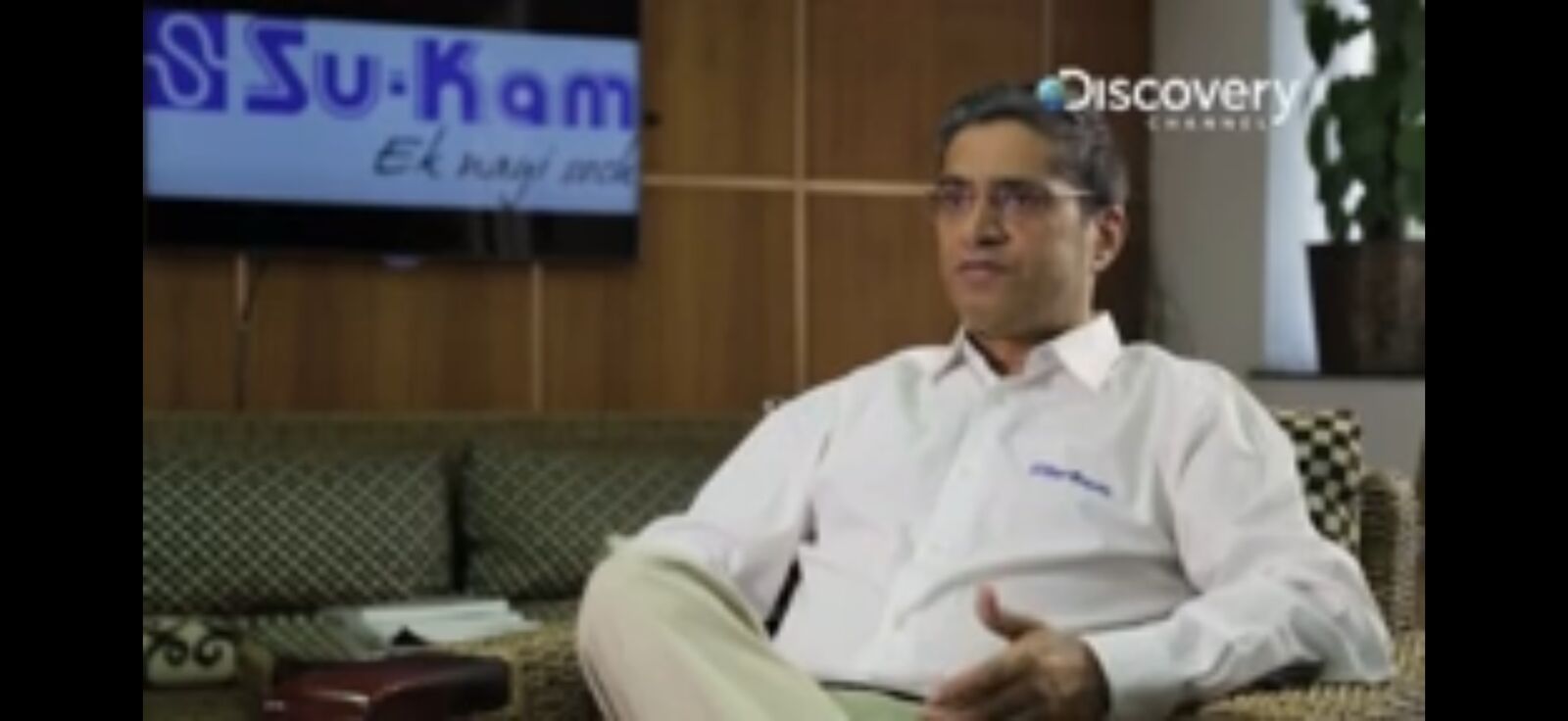
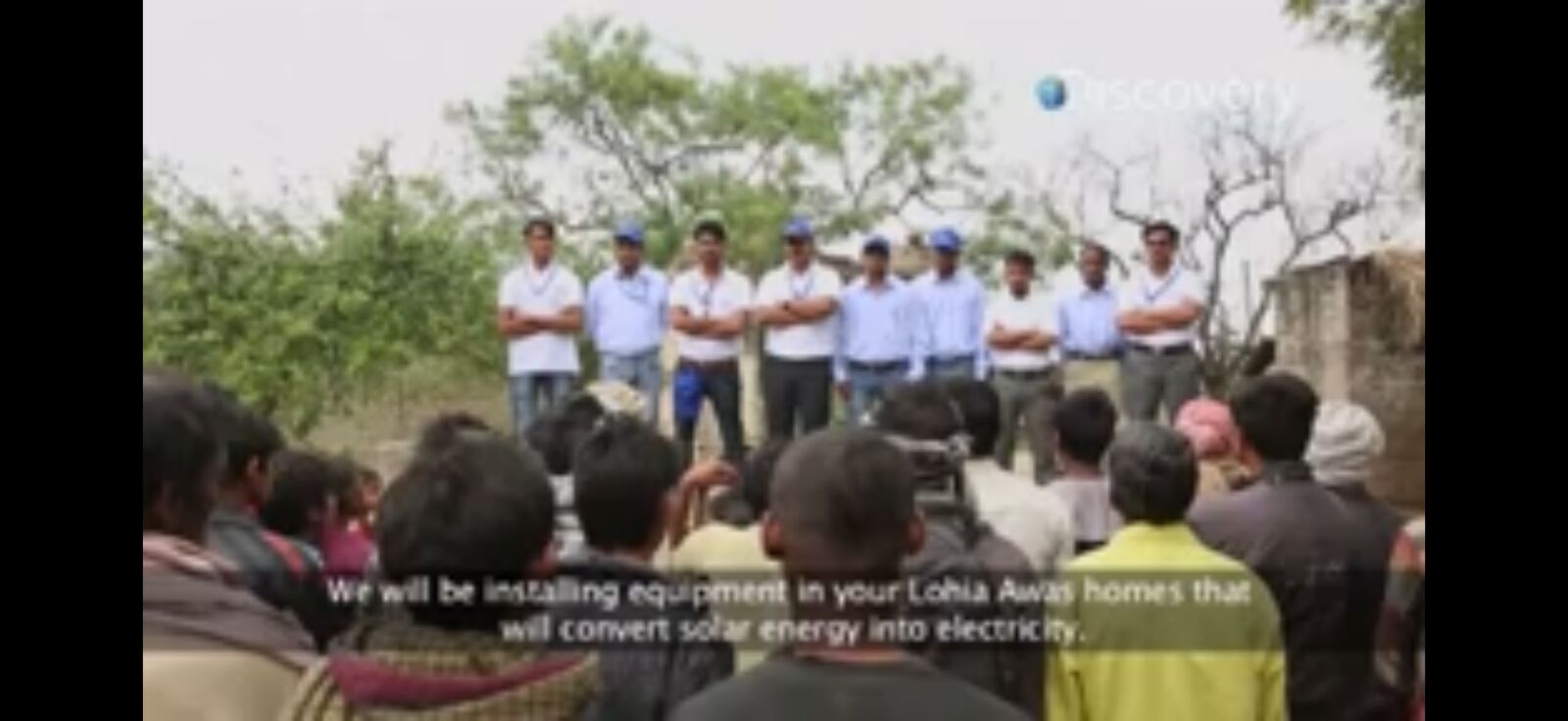
Su-Kam had taken solar lighting to the India–Pakistan border posts manned by the BSF; mini solar plants had been inaugurated in constituencies with Dr. A.P.J. Abdul Kalam doing the honours. Su-Kam had signed a solar storage alliance with Trojan Battery, partnered with Tata Power Delhi for distributed solar, and pushed solar into petrol pumps, schools, and rural cold-chain depots. The Hindu BusinessLine was already tracking the rooftop demand curve. And the Sun Fuel documentary feature on the Discovery Channel had quietly begun framing solar to Indian audiences the way Kunwer had always framed it — as a fuel, like petrol, except free, infinite, and Indian.
The MW team did not have to invent the solar story. It had to sell into a country that had not yet noticed it.
The Lesson
The hiring rule worth keeping
The reason the Ashish Sethi decision is worth re-telling is that it is one of those rules that sounds wrong in a job description and turns out to be right in the field. Hire industry veterans when the industry is mature. Hire fresh eyes when the industry is just being born. The right answer changes with the maturity curve, and the founder's job is to know which curve they are actually on.
For Su-Kam in those first MW solar years, India was on the second curve. The industry was being born. And the best person to sell into a market that is being born is sometimes the one who has not yet been told what is supposed to be impossible. Kunwer's call to hand the MW solar team to an outsider was, in retrospect, less a leap of faith than a clear-eyed reading of where Indian solar actually was — and a refusal to manage it as though it were already further along than it was.
The 3 MW SECI bid started India's MW solar era. The outsider running the team is what kept it going.
Editorial Note · Independent Coverage
This article is part of an independent editorial series on invertermanofindia.com. It is written by the site's editorial team, drawing on first-person recollections from associates who worked at Su-Kam during this period, on the publicly reported press coverage cited above, and on the founder's own account in a video conversation available here. It is not authored, ghost-written, edited or approved by Mr. Kunwer Sachdev, by any company he was previously associated with, or by any company he is currently associated with. The views, framing and interpretations in this article are the editors' alone.
Disclaimer
Mr. Kunwer Sachdev, the original founder and visionary behind Su-Kam, is no longer associated with Su-Kam Power Systems Ltd. He has not been involved in the management, operations, or decision-making of the company for several years. Any products, services, communications, or representations made under the Su-Kam name have no connection to Mr. Kunwer Sachdev. His current efforts are entirely focused on new innovations and ventures under different entities, including his latest initiative, Su-vastika, which is redefining the energy storage and power backup industry.