The Brand That Arrived Before the Branding Department
Most successful companies can point to the year they hired a marketing director, launched their first national campaign, or signed their first celebrity endorsement. Su-Kam’s brand was already half-built before any of those things happened.
Kunwer Sachdev’s instinct for branding was not formal. He had never studied marketing. But he had spent his entire professional life in front of customers — at cable TV installations, at dealer counters, at trade exhibitions in Hong Kong and Singapore where he’d walked for hours reading product catalogues because he couldn’t afford a taxi. He had learned by observation what made a company memorable and what made it forgettable.
What made it memorable, he concluded, was presence. Not advertising — presence. Being physically visible, consistently, at the exact point where a customer was making a decision.
The Dealer Board Years
In the early 2000s, as Su-Kam’s distribution network was growing city by city and district by district, Kunwer made a practice that his competitors would not adopt for another decade: he invested in making his dealers’ shops look like Su-Kam shops.
Branded boards. Painted walls. Point-of-sale material — the same POS displays he had tried to manufacture domestically in 2004, cutting the cost of the imported alternatives. When a customer walked into a battery shop or an electrical goods store in a tier-two city and saw Su-Kam signage dominating the entrance, the brand had already done half its work before a word was spoken.
The practice was simple. The discipline required to execute it across hundreds of dealer relationships was not. Kunwer drove it personally in the early years, often visiting dealer locations on the same trips where he was handling customer complaints or demonstrating new products.
The International Exhibition Circuit
The branding instinct extended to international trade shows — a commitment that cost money Su-Kam could not always comfortably spare, and that Kunwer maintained anyway.
He had attended international exhibitions since 1988, sleeping in dormitories and walking between halls because taxis were an expense he’d eliminated. He had attended those early shows as a visitor, picking up catalogues, learning what the global market looked like. He had always told himself: one day my company’s products will be in these halls.
When that day came, he treated it with the same seriousness. Su-Kam stalls at Intersolar, Electronica, and regional trade fairs across Africa and the Middle East were not low-budget presences. They were brand statements. The export head he trained to manage international relationships was also trained to manage international brand perception — what the stand looked like, what literature was available, how the team presented themselves.
“Consistent participation in these global showcases was crucial for establishing our identity in the international market,” he said. What he did not say, but what anyone who watched the process understood, was that consistency is expensive and the results are invisible until they are suddenly everywhere.
Google Before Google Was a Marketing Tool
The most forward-thinking chapter of Su-Kam’s branding story came not from any agency or any campaign, but from Kunwer’s direct engagement with a platform that most Indian manufacturers had not yet registered as relevant.
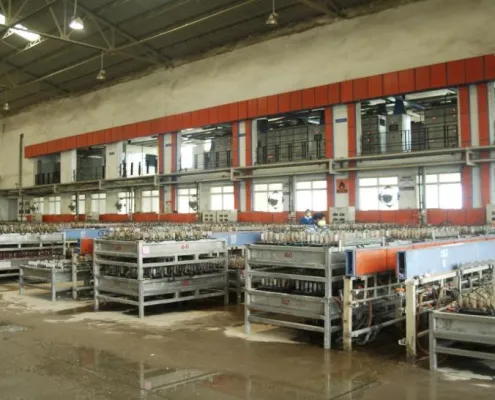
By 2011 and 2012, he was systematically using Google Location services to document and upload content from Su-Kam’s factories and offices. Every facility was given a Google Maps presence. Engineers were asked to photograph products in development, production lines in operation, solar installations mid-completion, and share them to the location. Videos of the factory floor, of product demonstrations, of export shipments being prepared — all uploaded to the company’s Google presence.
The result was that anyone searching for Su-Kam online encountered not just a website, but a living visual record of a real manufacturing operation. At a time when most of Su-Kam’s competitors had static or absent digital presence, this gave the brand an unusual authenticity — the kind that marketing budgets usually cannot buy.
“I took deliberate steps to encourage all of my factories to document and share images and videos of the innovative products and inventions they were developing,” he explained later. “Every factory was equipped with a Google location, ensuring that photographs and video content were consistently uploaded.”
The most challenging part, he noted, was not the technology. It was changing the internal culture — making engineers and production teams understand that documenting their work was part of their work, and that a photograph of a new product sitting on a workbench was a marketing asset.
The Name That Competitors Could Not Own
There is a particular kind of brand equity that emerges not from advertising but from a product becoming the generic name for a category. In India, Xerox became a verb. Fevicol became synonymous with adhesive. Kunwer created two equivalent moments in the power backup industry.
When Su-Kam launched the “Home UPS” in 2005, the term did not exist. Within a year, every competitor was selling something they called a Home UPS. The category name had become the market name, and the market name had been coined by Su-Kam. Competitors who used it were, in effect, reminding customers that Su-Kam had been there first.
The same pattern played out with the LED indicator panel inspired by aviation displays — copied across the industry within two years. With the black chassis that had been a deliberate break from convention in 1998 and became the industry standard. With the plastic inverter design that competitors rushed to replicate, often badly.
Brand equity, Kunwer understood by the end of it, is less about what you say and more about what you do first. Su-Kam’s deepest brand asset was its genuine priority — being first, consistently, in a market where first was still possible.
The billboards helped. The Google uploads helped. The dealer boards helped. But the foundation of the brand was built product by product, a decade before anyone thought to call it branding.