By a former associate of Kunwer Sachdev
There was a noise that lived in Indian homes for years, and most people had stopped hearing it. It came from fans running at slightly wrong speeds. From televisions with a faint flicker in the backlight. From refrigerator compressors that cycled unevenly. It was the sound of square wave electricity — the output produced by every home inverter in India — running through appliances designed for something cleaner.
The hum was not a mystery. Electrical engineers understood exactly what caused it. When an inverter converts stored DC battery power back into AC for household use, it needs to produce a waveform. The simplest and cheapest way to do this is a square wave: power that switches abruptly between positive and negative voltage, producing a blocky approximation of the smooth sinusoidal curve that flows from the grid. Most appliances tolerate it. Some tolerate it less well over time. Motors run hotter. Transformers buzz. Inductive loads — fans, pumps, air coolers — operate inefficiently.
The solution was known: a pure sine wave output, matching the smooth curve of grid electricity so precisely that appliances could not tell the difference. The technology existed in large industrial UPS systems, where protecting sensitive equipment justified the cost and complexity. Nobody had brought it to the Indian home inverter market at an accessible price point.
Two Teams, One Problem
Kunwer decided to change that in the mid-2000s.
The challenge inside his R&D department was not purely technical. The team that had built Su-Kam’s existing product line was experienced, cohesive, and — as experienced, cohesive teams sometimes are — resistant to the kind of disruptive project that would require learning unfamiliar technology from scratch. Sinewave generation for a home inverter required different control circuitry, different software, different testing protocols. The existing team’s instinct was to protect the product line they knew.
His solution was to create a second R&D team.
The new team was smaller, led by a freshly hired engineer who had not yet acquired the habits of the established group. Kunwer gave both teams the same brief: develop a working single-battery sinewave inverter prototype. Both teams would receive equal resources. Both teams would be rewarded equally if they succeeded. The competition was explicit and deliberate.
The new team moved first. They built a prototype using DSP — Digital Signal Processing — technology. It worked, in the sense that it produced a sinewave output. But it had limitations: the DSP approach was expensive, the implementation was complex, and the prototype had stability issues under varying load conditions. It was a proof of concept, not a product.
The existing team, stirred by the competition, did not replicate the DSP approach. Instead, they worked with a standard microcontroller — cheaper, more familiar, more manufacturable — and over the following months developed a more reliable implementation. The two teams’ work converged: the new team’s DSP prototype established that the goal was achievable, and the existing team’s microcontroller approach established how to achieve it affordably.
The Dealer Problem
With a working prototype and a path to production, Kunwer faced a different challenge: the market did not know what sinewave meant.
The dealers who sold inverters — the distributor network Su-Kam had spent years building across India — were practical businesspeople. They understood price points, battery compatibility, warranty terms, after-sales service response times. “Pure sine wave output” was a technical term that meant nothing to a dealer explaining products to a household customer. “Better for your appliances” was vague. “Reduces the hum from your fan” was marginal.
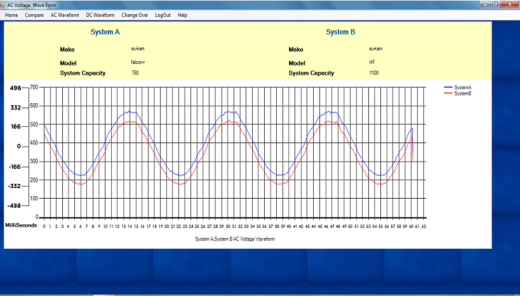
Kunwer organised dealer meetings across the network. He brought testing equipment — oscilloscopes that could display the waveform output visually, side by side, square wave versus sine wave. He ran demonstrations. He showed dealers the difference on a screen and then asked them to listen to a fan motor running on each. He made the abstract concrete.
The approach worked because the demonstration was honest. The difference was visible, audible, and real. Dealers who understood what they were selling could explain it to customers. Customers who saw the comparison understood immediately why the premium price was justified.
China’s Gap
At the time Su-Kam launched its sinewave inverter, Chinese manufacturers — who had by then become formidable competitors in the broader inverter market — had not developed indigenous sinewave technology for the home segment at comparable price points. This was a window, and Kunwer recognised it.
Su-Kam began exploring export opportunities on the back of the sinewave product. The technology advantage was real and temporary — Chinese R&D would eventually close the gap, as it always did — but it was genuine while it lasted, and it validated a strategic principle that Kunwer had articulated since the customs warehouse days in 1992: invest in the capability before the market demands it, and you will be ahead when the market arrives.
The Broader Pattern
Looking at the sinewave story alongside the Chic inverter story, the MOSFET breakthrough of 1998, and the EchoStar years, a pattern becomes visible that those inside Su-Kam at the time recognised but rarely articulated formally.
Kunwer’s competitive instinct operated on a specific rhythm. He would identify a problem that customers were tolerating without realising they were tolerating it. He would ask whether the technical solution existed. He would discover that it did, elsewhere in the world, but had not been applied to the Indian market. He would invest in making it available — through manufacturing, through R&D, through partnerships — at a price point that the Indian market could sustain. And he would then educate the market about why they should care.
This was not, strictly speaking, invention. It was translation: taking what was technically possible and making it commercially real for a specific context. The sinewave inverter was not a new idea. The idea of bringing pure sinewave output to a single-battery home inverter sold through the same channel as a basic cable TV amplifier — that was the specific contribution.
The hum began to leave Indian homes. Slowly, then completely, as every competitor eventually followed.
By a former associate of Kunwer Sachdev